Ever heard of Poe? Don’t worry if not. Most parents I talk to haven’t either. But if your teen’s into AI chatbots, there’s a decent chance they’ve come across it.
So what is it? Poe is an app made by Quora, the question-and-answer website. Instead of being one AI, it’s lots of them in one place. Your teen could be chatting to ChatGPT one minute, Claude or Gemini the next, all from the same account.
And then there are the user-made bots. Anyone can build one, give it a personality and a backstory, and set it up to role-play as a character. Some are harmless fun. Some, well, you’d want to know about.
Who’s actually allowed on it?
On paper, you have to be 13 to use Poe, and under-18s need a parent’s permission. In practice, nobody checks. You sign up with an email, and depending on where you live, it might ask for a date of birth. If it does, it just takes whatever your child types in.
What might they come across?
Poe’s own terms say it pretty plainly: bots on Poe “may produce content that is not suitable for minors.”
There are rules. Poe bans the really awful stuff, like self-harm methods, sexual content involving minors and non consensual sexual content, and it can remove bots that break them. But from what we can see, bots aren’t checked before they go live. So a bot some stranger made last week could be one tap away from your child.
And what happens to their chats?
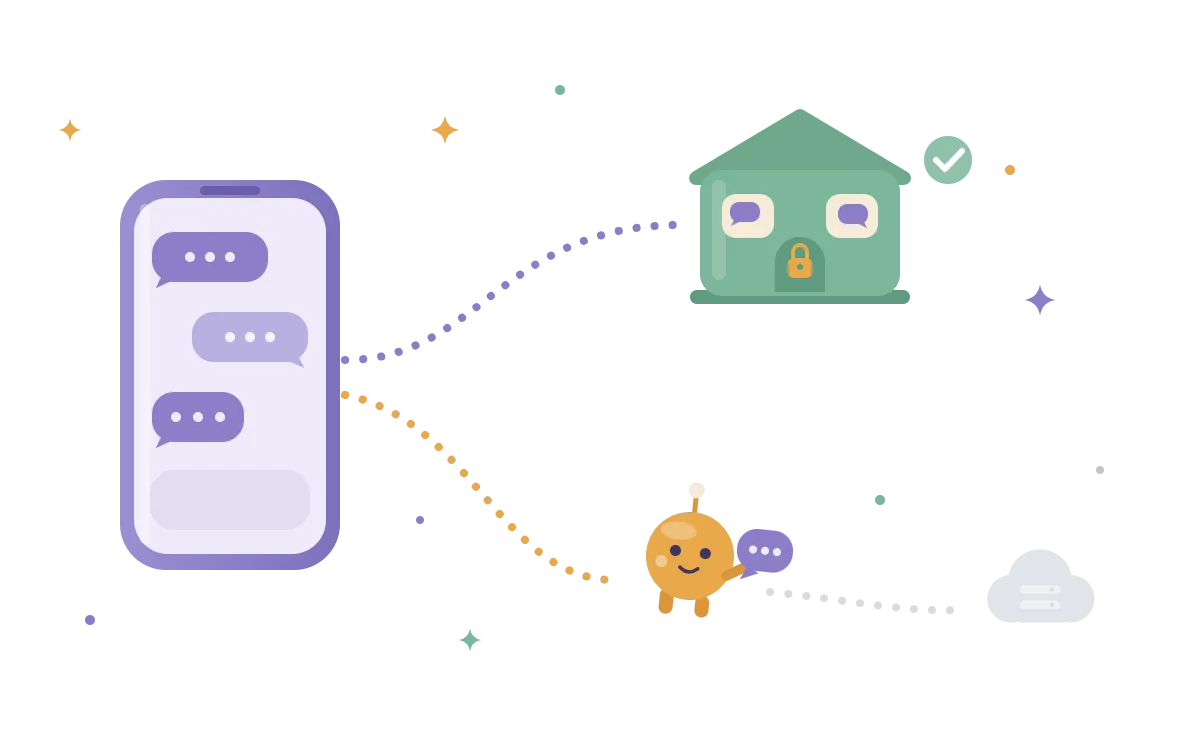
This bit surprised me. For Poe’s official bots and the big-name AIs, Poe says it doesn’t use chats to train AI, and you can delete chats or the whole account. Fair enough.
But if your child chats to a bot made by an outside developer, Poe says that developer “may view and store your chats on their servers to train their models.” So those conversations can end up somewhere outside Poe altogether.
To be fair, Poe isn’t worse than everything else out there. Plenty of AI apps don’t check ages properly. It’s just that on Poe, a lot of what’s behind the door was built by whoever fancied building it.
What our scanner found
We ran Poe through our AI Risk Scanner, the same checks we use on ChatGPT, Character.AI and the rest. It scored 48 out of 100, “supervision advised”, which puts it somewhere in the lower-middle. The two things that dragged it down most were the age checks (basically just trusting whatever’s typed in) and bots that can show content that isn’t meant for kids.
If you want to see everything we found, with sources, it’s all at haloaware.com/ai-safety/poe.
Good news if your teen does use Poe: Halo Aware covers it. If they’re using it in a browser on their computer, you’ll get the same kind of summaries you’d get for ChatGPT or Gemini. You won’t see every message, just what it was about, and whether anything needs your attention.
A few easy things to ask your teen
“Have you ever used Poe, or heard your mates talk about it?”
“Did you know it’s loads of different bots, and some are made by random people?”
“Has a bot on there ever said something that felt a bit off?”
Keep it casual. You’re just curious, not checking up on them.
One last thing
Poe isn’t a household name yet, and that’s sort of the point. The worst feeling is finding out later that your kid’s been using something you’d never even heard of. Five minutes of chatting now saves that surprise.