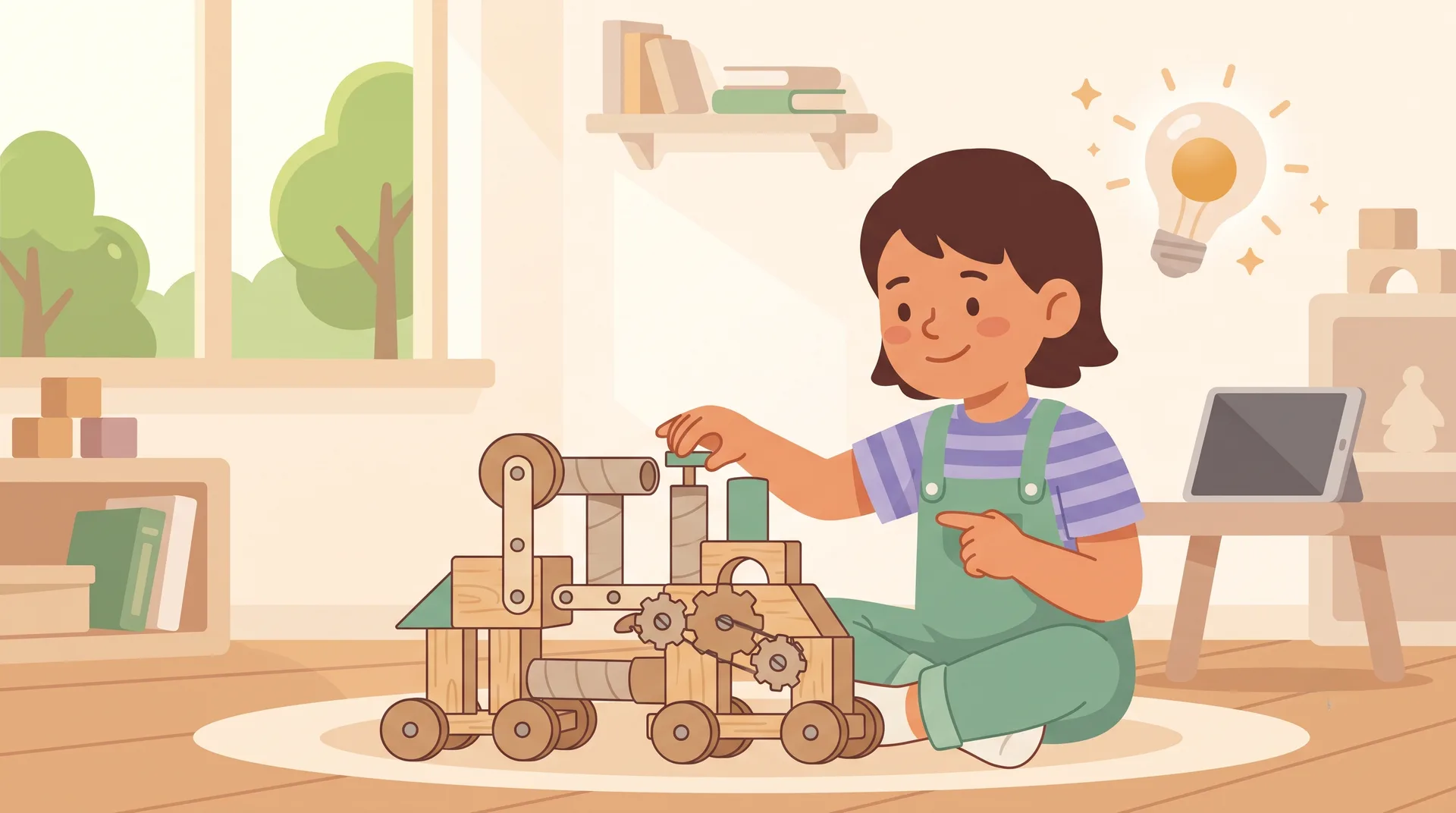
We've all seen it, that look of pure wonder when a child realises the computer can "talk" back. "Oh my gosh, it just said hello to me!" Whether they're asking ChatGPT to write a rap about Minecraft or help with a tricky fractions problem, that digital curiosity is a real superpower. It's the engine of everything they'll go on to build.
But as parents, there's a second voice in our heads: what about safety? How do we let them explore without falling into rabbit holes of misinformation, or leaning on the bot a little too much?
Here's how I try to hold both.
1. Talk about how AI makes things up
Kids often treat AI as an all-knowing machine, so the first thing worth teaching them is that it isn't. AI doesn't actually know facts, it just predicts the next likely word in a sentence, which means it sometimes states things confidently that simply aren't true.
Turn fact-checking into a habit. If ChatGPT gives a date for a historical event, make a little game of verifying it on a trusted site together. Once a child has caught the bot being wrong even once, they never quite trust it blindly again, and that's exactly what you want.
2. Privacy really matters
These days, data is more than an email address. It's a whole behavioural profile of your child, built up quietly over time.
The simple rule to teach them: never tell an AI anything you wouldn't happily shout across a crowded school hallway. No real name, no school, no address, no phone number.
And show them the practical options, like ChatGPT's Temporary Chat, which keeps a conversation out of its history and out of model training. (OpenAI holds a copy for around 30 days for safety, then deletes it.) It's a good habit to build early.
3. It's a robot, not a friend
As chatbots get warmer and more human in tone, younger children especially can start to attribute real feelings to them. The risk is simple: if a child sees the AI as a best friend, they may start taking its advice more seriously than they take yours.
Gently remind them it's a very clever calculator, not a person. And make room for plenty of low-tech, offline play, so the screen isn't the main event in their day.
4. Encourage the good kind of curiosity
Safety shouldn't mean saying no to everything. There's loads AI is genuinely brilliant for, so point your child toward it:
Brainstorming: "Give me 10 ideas for a science fair project about magnets."
Skill-building: "Explain how to use a for-loop in Python like I'm five."
Creative spark: "Give me a writing prompt about a cat who lives on Mars."
Used this way, AI becomes a springboard for their own ideas rather than a replacement for them.
The bottom line: we don't want to put out the fire of curiosity, we just want to build a sturdy fireplace around it. By exploring alongside your child rather than standing guard over them, you help them build the one skill that matters most in all of this: thinking for themselves.
Details about ChatGPT's Temporary Chat in this post were checked in August 2026. These features change often, so it's always worth checking the latest on each platform.