Is Your Child Too Dependent on AI?
In 2026, generative AI is as much a part of your child’s life as their phone! While it can be a powerful aid, we are seeing a shift in how children approach problem-solving. At Halo Aware, we frequently hear from parents who aren't against technology, but are concerned about being dependent on AI.
It’s a subtle shift. It’s about ensuring that the child is still the one doing the thinking. Here are five warning signs that your child might be relying a little too heavily on AI.
1. The "Blank Page" Panic
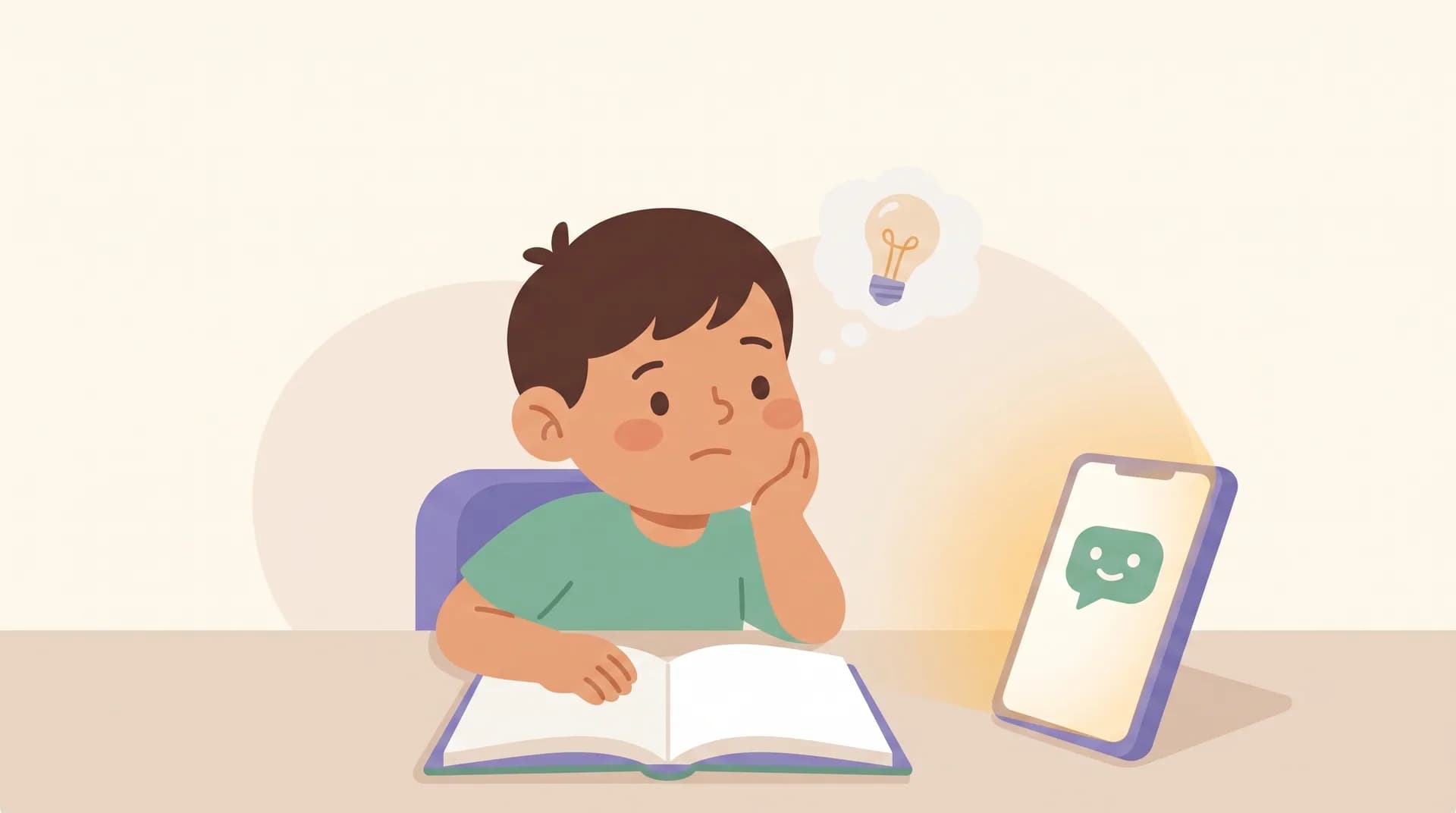
Does your child struggle to start even the simplest writing or creative task without immediately saying, “Shall we ask ChatGPT?”? If a student stares at a blank screen and panics until they have an AI-generated outline or opening paragraph, this is a sign of dependency. They have learned to rely on the AI to "initiate" the thinking process rather than building the mental muscle to start independently.
2. Sudden Shifts in Work Quality
One of the most telling signs is inconsistency. If your child’s writing or problem-solving capability fluctuates wildly, appearing sophisticated in one assignment and basic or incomplete in another, it often signals a shift between "AI-assisted" work and "independent" work. Watch for an overly formulaic structure or a vocabulary that feels "off" or suddenly advanced for their age.
3. Immediate Defensiveness When Questioned
When you ask, "How did you come up with that conclusion?" or "Can you explain the logic behind this?" does your child struggle to answer? If they can’t articulate the process because the AI provided the final result, they aren't just using a tool, they are "offloading" their thinking. A healthy user should always be able to explain the "why" behind the "what."
4. Compulsive AI Checking
Is your child checking an AI tool for minor decisions, things they used to handle themselves? Whether it’s deciding how to structure a simple chore, what snacks to pack, or how to phrase a basic text to a friend, constant validation-seeking from a chatbot can weaken a child’s confidence in their own judgment. You might not actually know they’re doing it, but 81% of children aged 11–16 use chatbots in the UK. (vodafonethree.com) Yours might be one of them.
5. Visible Distress Without Access
When technology is restricted, during family dinners or preparing for their GCSE’s, does your child seem disproportionately frustrated or anxious? If the absence of AI triggers a "shutdown" where they feel unable to function, it’s a clear indicator that their internal problem-solving framework has become too tied to external digital support.
Moving From "Hovering" to "Halo-Monitoring"
At Halo Aware, we understand that you can’t look over your child’s shoulder 24/7. Nor should you want to that removes the trust that is essential for healthy development.
The goal isn't to monitor their every word, but to ensure they aren't drifting into unhealthy habits. Our dashboard is designed to provide you with visibility into how they are using AI, alerting you only when it matters. Such as when they hit a safeguarding concern or exhibit patterns that suggest they need a guiding conversation.
AI will be a part of their future. Let’s make sure they are in the driver's seat.