Why don’t we hand you over the whole transcript?
If you are raising a teenager today, you are probably already exhausted trying to keep up with the digital world. You know to watch out for cyberbullying on Instagram and endless scrolling on TikTok. But right now, there is a massive new risk surface that most parents don’t even know exists: AI chatbots.
Kids aren't just using ChatGPT or Character.AI to help them on their homework. They are using them as diaries, replacement friends, and… therapists. They are pouring their deepest secrets into these chat windows because the AI feels safe, attentive, and entirely unjudged.
What happens when those conversations turn dangerous? When an AI starts giving terrible mental health advice, or a child becomes dangerously dependent on a bot?
At Halo Aware, we built a way to catch these risks. But if you're wondering why we don't just hand you the full chat transcript when things go wrong, here is exactly how our system works, and why keeping those transcripts hidden is actually the safest thing you can do.
How the Flagging Actually Works
Traditional parental controls operate quite plainly, they either block an app entirely, or they log every single keystroke your child makes. Neither of those works for conversational AI.
Halo Aware does something different: contextual, real-time scanning.
Our browser extension sits quietly in the background while your child interacts with an AI chatbot. It is constantly analyzing the context of the conversation for specific safety signals. Things like signs of self-harm, grooming, bullying, or dangerous emotional dependency.
No human is reading the chats.
Routine conversations are ignored.
Normal homework help or general innocent conversation passes right by.
The system is just looking for the moment a conversation crosses the line from harmless chatter into real-world risk.
What You Get (And Why It’s Only a Summary)
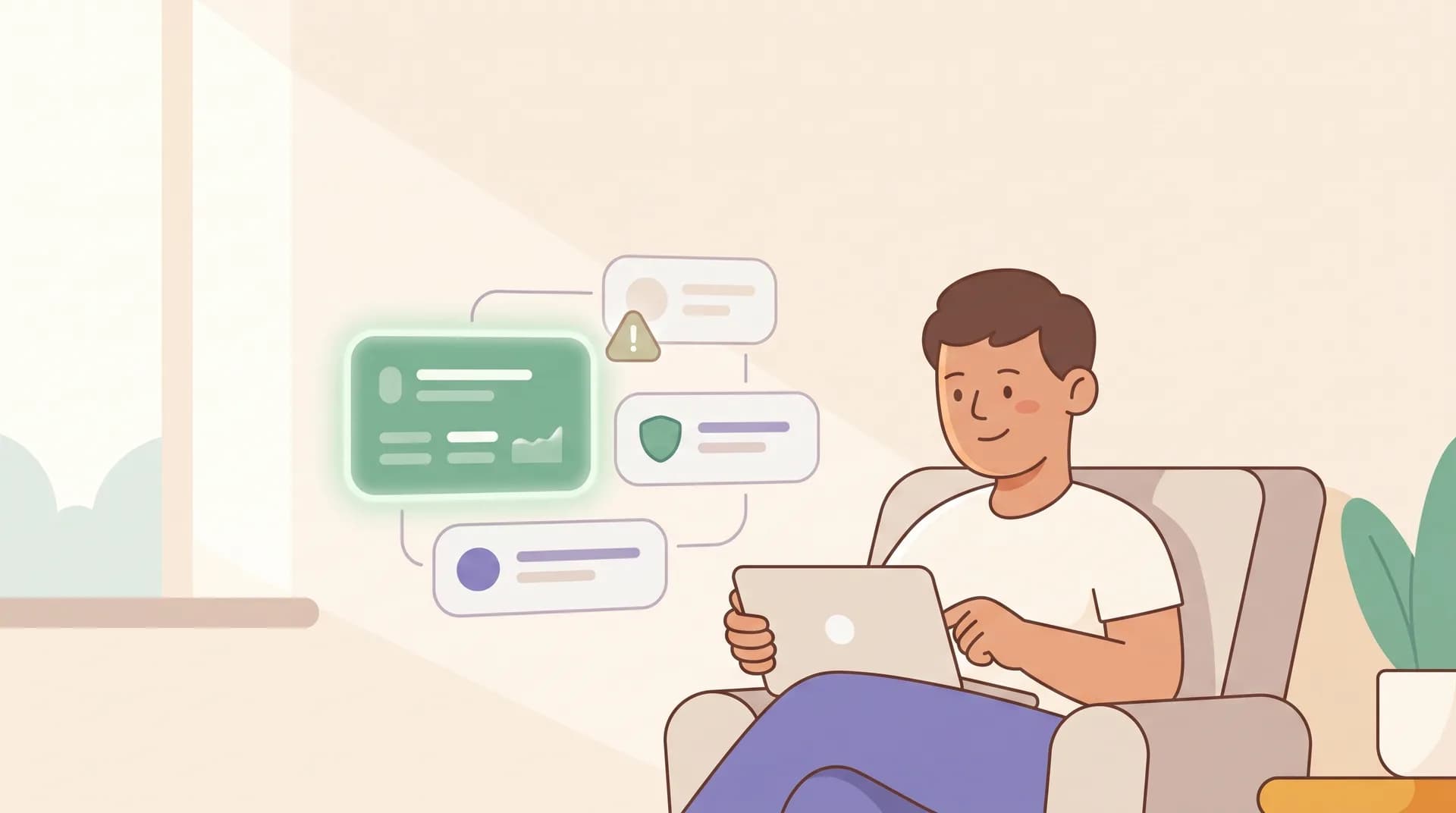
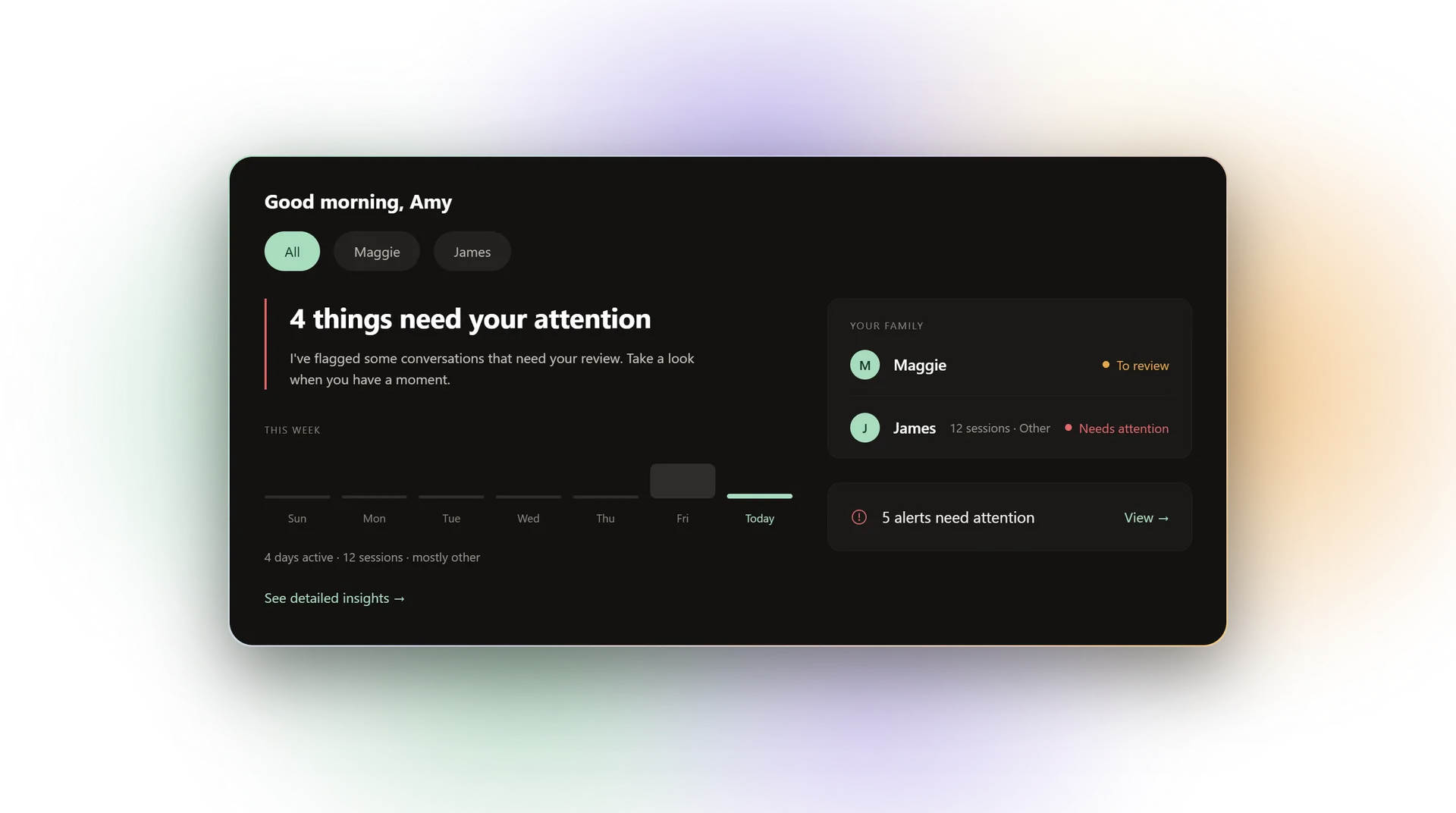
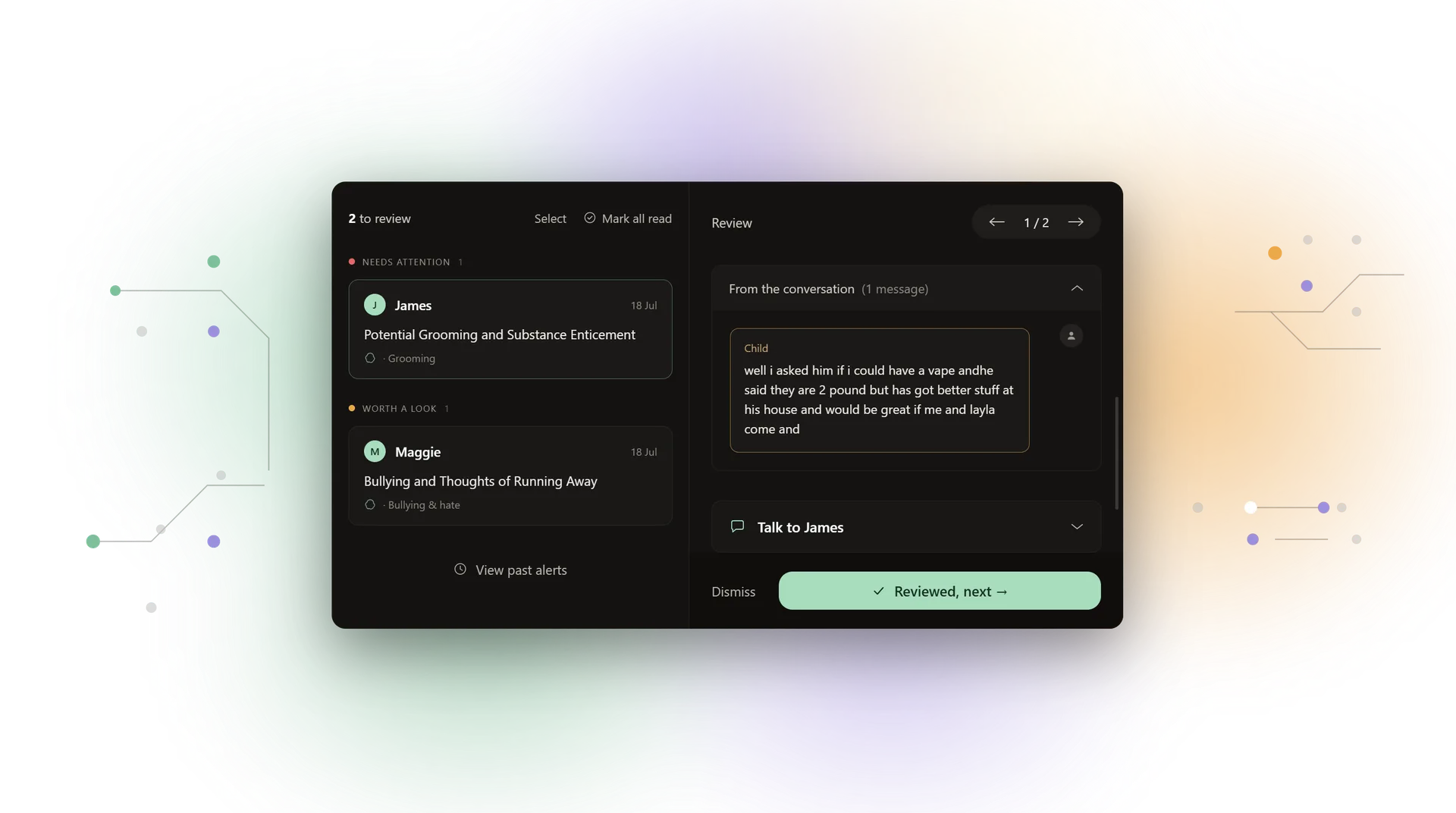
If the AI does flag something risky, your parental dashboard lights up with an alert. But here is the critical part: we will never show you the full conversation transcript unless it is serious and you need to read that snippet, to step in as a parent.
Instead, you receive a high-level summary. It might look something like this:
🚨 Alert: High Risk Conversation Detected. 📝 Summary: Your child has been expressing feelings of severe hopelessness to this chatbot and asking it to keep a secret coping plan hidden from family members.
Why don’t we show you the exact messages? Because the moment you read your child's messages, you destroy their trust in you.
If you confront a teenager with a printed-out transcript of their most private, vulnerable thoughts, they won't feel protected, they will feel violated. They will immediately find a new, more hidden way to communicate, driving the risky behavior further underground where you can't help them at all.
Summaries, Not Surveillance
We built Halo Aware on one fundamental philosophy: Summaries, Not Surveillance.
You absolutely have the right, and the responsibility, to know if your child is in danger online. But your child also deserves a baseline of privacy to figure out who they are.
By providing a summary, we give you the exact context you need to step in and have a real, human conversation with your kid. You get to say, "Hey, I'm worried about some of the things you've been leaning on that chatbot for," rather than "I read exactly what you typed at 11:45pm."
You stay in the loop. Your kid keeps their privacy. And most importantly, the bridge of trust between you stays completely intact. Remember, you do get the snippet of conversation if it’s a real safeguarding risk.
Ready to Protect Without Prying?
If you want to protect your kids from the hidden risks of AI without turning your home into a surveillance state, we are here to help.
https://chromewebstore.google.com/detail/halo-aware/akjdjafenmdmlgljdlgjijpjhdpeegai
Want to see exactly what this looks like in action? Visit our tik tok or instagram pages for walkthroughs or tutorials.
Instagram - @Haloaware
Tik Tok - @Halo_Aware